New Directions in Philosophy of AI

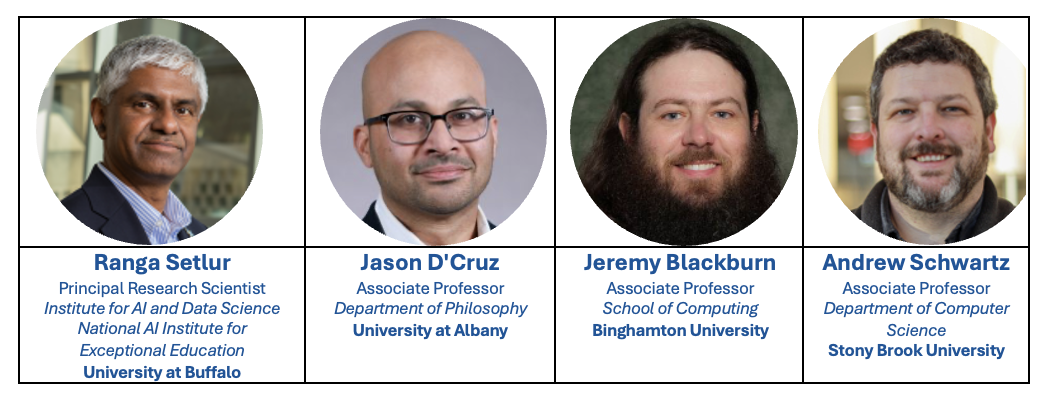
Great to join this amazing line up of speakers at WashU April 24-25

https://philosophy.wustl.edu/past-events/new-directions-philosophy-artificial-intelligence

Annette Zimmerman (University of Wisconsin-Madison)

Shamik Dasgupta (University of California, Berkeley)

Jason D’Cruz (University at Albany): “Sorry/Not Sorry: The Puzzling Case of Chatbot Apologies”

Karen Frost-Arnold (Hobart and William Smith Colleges): “Pay Attention to This!  Epistemic Responsibility and Social Media Algorithms”

Atoosa Kasirzadeh (Carnegie Mellon University)

David Kinney (Washington University in St. Louis): “LLM-Generated Semantic Networks Predict Semantic Priming Effects on Human Reaction Times in a Word-Recognition Task”

Chad Lee-Stronach (Northeastern University)

Eric Wiland (University of Missouri-St. Louis): “Withholding Advice”
AI-Driven Solutions for Global Challenges

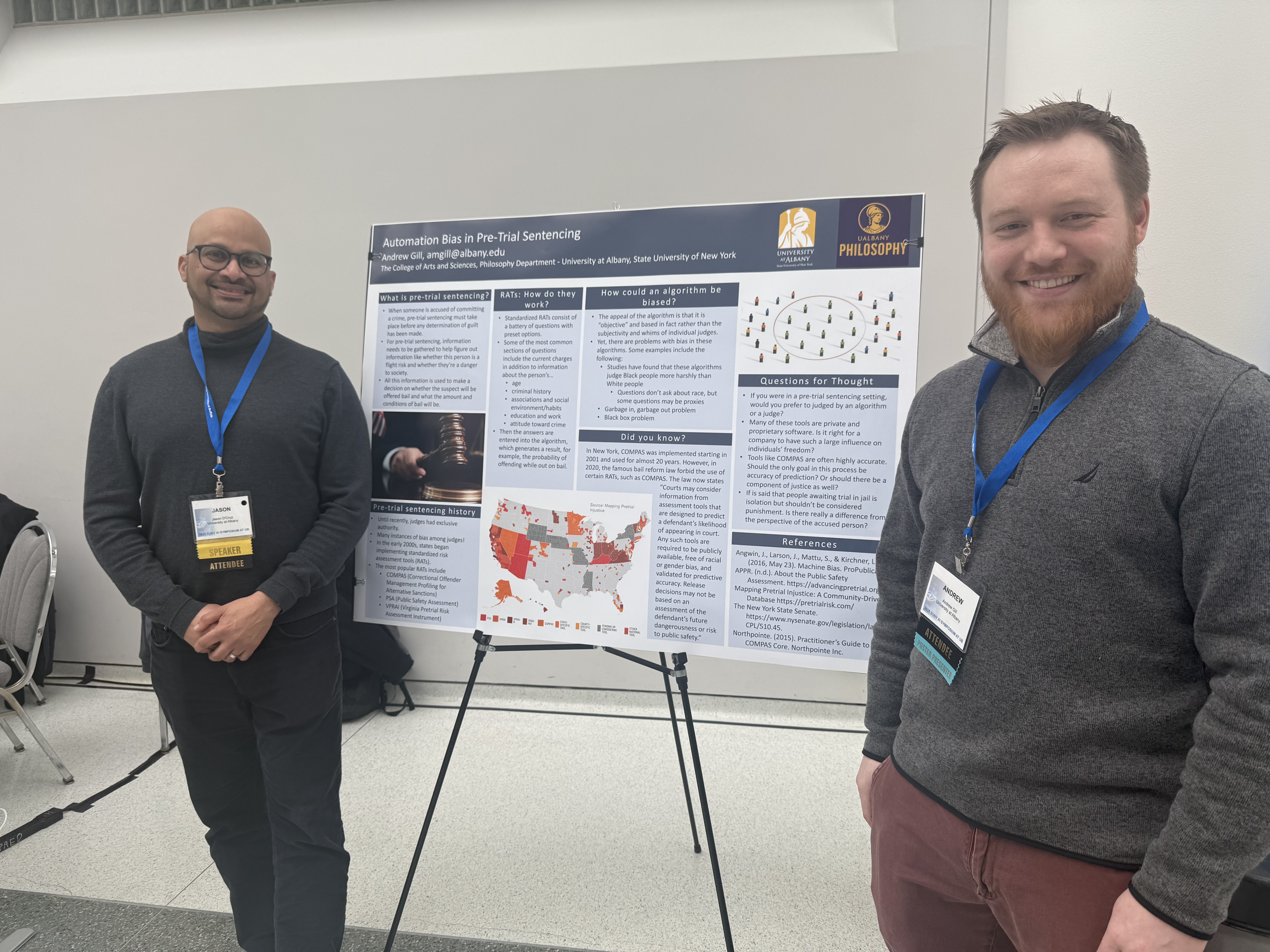
On Feb 8 at 2pm I’ll be presenting at SUNY’s “Public Good U” conference on the panel, “AI-Driven Solutions for Global Challenges”. Here’s the blurb:

Artificial Intelligence is rapidly reshaping society while simultaneously being shaped by it. This co-evolution raises important and complex questions across a wide range of academic disciplines, from engineering and computer science to health sciences and the humanities. This panel examines these complexities, emphasizing the need for interdisciplinary collaboration and exploring how the SUNY and CUNY systems, as a robust network of public universities, are uniquely positioned to address these challenges collectively.

Runaway pretense

My paper, Runaway Pretense, is now published with Analysis. Here’s the abstract and a link:
Deceptive displays of emotion can be used to manipulate another person’s beliefs, desires and emotions. This is an important but often neglected function of imaginative pretence. Pretending to be angry or aggrieved is a powerful strategy to gain emotional leverage. But subjects who deploy such tactics expose themselves to the peculiar hazard of losing track of the fact they are pretending. Such manipulators risk losing grip on their all-things-considered emotional take in a way that undermines their own goals and harms relationships.